The recent closure of schools across Caerphilly during the Red Heat Health Alert has highlighted an important question: are our schools prepared for the effects of climate change?
No one should criticise schools for putting the safety of pupils and staff first. When temperatures inside classrooms become unsafe, headteachers have difficult decisions to make.
However, if extreme heat is becoming more common, we cannot simply accept that school closures will become part of normal life.
We have written to local schools and the Council asking what plans are in place to make school buildings more resilient.
Simple improvements could make a real difference. More trees around playgrounds, external shading, better ventilation, improved insulation, reflective roofing materials and targeted cooling in the hottest classrooms could all help reduce temperatures and allow schools to remain open safely.
We've also asked whether decisions to close schools considered not only the risks of remaining open, but also the risks associated with closure. While safety must always come first, closures can mean children spending the day in homes that are no cooler than school, increased safeguarding concerns, disruption to learning and, in some cases, children seeking relief in rivers, lakes or other potentially dangerous locations.
Climate change means we must start adapting our public buildings to cope with more frequent periods of extreme heat.
Our hope is that recent events become the catalyst for practical investment so that our schools are better prepared for the future.
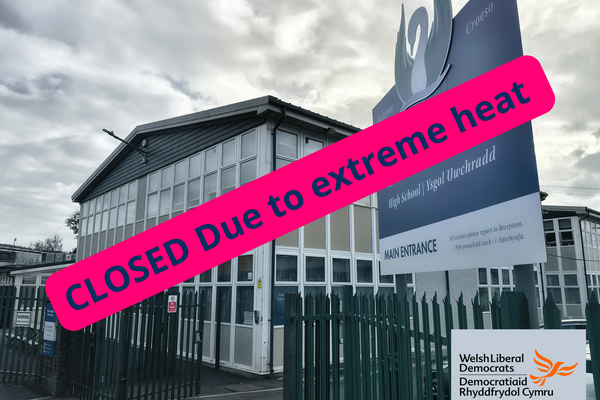
Resilient Schools
We call on Caerphilly County Borough Council to:
-undertake a heat resilience audit of every school;
-publish a county-wide School Heat Resilience Strategy;
-prioritise investment in shading, tree planting, ventilation and classroom cooling where needed;
-ensure future school building projects are designed to cope with extreme heat;
-report publicly on progress each year.